For a long time, fintech has been built on a simple assumption: that financial life begins when someone downloads a banking app.
Open an account. Fund it. Start transacting.
However, the more we’ve built Cloud9, the more we’ve come to believe that this assumption is fundamentally wrong. Finance doesn’t start in banking apps or branches. It starts in life.
And increasingly, it starts in the creator economy and entertainment — the fastest-growing layer of how young people earn, spend, and connect. It starts when someone needs to go get paid for an online gig. When they decide to go to a concert, a sports event, or even to watch a movie at the cinema. When they pay for a flight or bus to travel across the country. When they show up for an experience that matters to them. These are not “financial moments” in the traditional sense. But they are the moments where money actually moves — consistently, emotionally, and at scale. And if you pay close attention, they reveal something important: The real financial system is already embedded in culture.
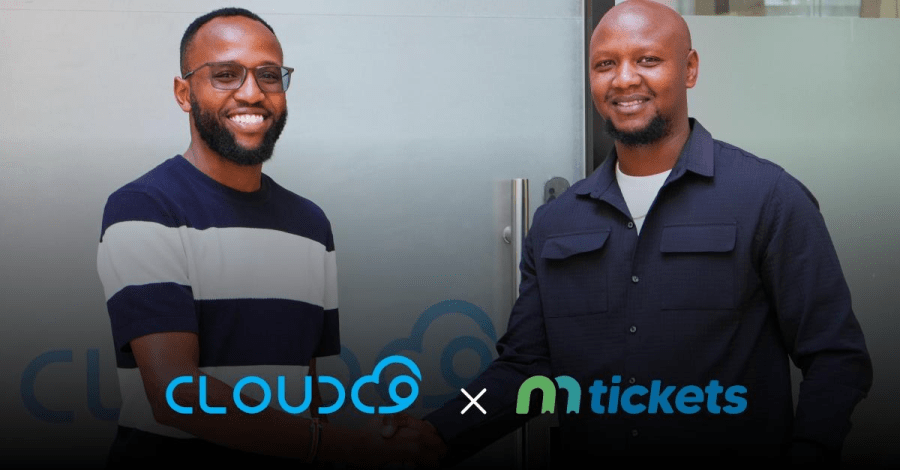
That realization is what led us to Mtickets.
On the surface, it is a ticketing platform — powering events, enabling organizers to sell tickets, and processing hundreds of thousands of transactions across Kenya’s growing events ecosystem. But when you look closer, it’s something more interesting.
It sits at the intersection of attention and intent. It captures moments where people are actively choosing experiences. And those moments are some of the highest-frequency, highest-trust transactions in a young person’s life.
In other words, it’s not just infrastructure for events. It’s distribution into culture. And distribution is everything.
For years, fintech has tried to win by building better products. Better wallets. Better payment systems. Better interfaces. But product alone doesn’t solve the hardest problem in financial services: getting close enough to the user at the right moment.
Because the truth is, people don’t wake up thinking about their bank. They wake up thinking about where they’re going, what they’re doing, and who they’re meeting. Money simply follows those decisions. So instead of trying to pull users into finance, we’re building finance around where they already are.
Mtickets gives us a natural place to do that, with an even deeper opportunity beyond the consumer side — on the supply side.
The creator economy and entertainment ecosystem don’t run on platforms alone. They run on people — event organizers, curators, promoters, and creators who bring experiences to life. They create the moments people remember. They drive community, entertainment, and shared experiences. Yet financially, they are often constrained by timing.
They pay for venues upfront. They secure talent in advance. They carry production costs long before revenue comes in. Their success depends heavily on early ticket sales and cash flow timing, not necessarily demand. That mismatch limits what they can build. So one of the first things we’re doing through this partnership is introducing credit for event organizers, backed by capital we’ve set aside specifically for this purpose.
This is not generic lending. It is contextual financing — tied directly to events, ticket demand, and real transaction flows. If you can see the business clearly, you can finance it better. And if you can finance it better, you unlock entirely new levels of growth for the people creating culture.
Better-funded organizers build better events. Better events attract more people. More people drive more transactions. And the ecosystem compounds. That’s the flywheel, and this is just the beginning, because ticketing is not limited to events. It extends into how people move and experience the world: flights, buses, rail, and everyday mobility.
All of these are structured, repeatable, high-frequency transactions that sit just outside traditional banking workflows — but inside real life. Over time, what starts as event ticketing evolves into a broader system for accessing both experiences and movement.
Cloud9 sits underneath it as the financial layer enabling it all.
The broader idea is simple. The future of fintech won’t be defined by who builds the best banking app. It will be defined by who understands where life happens — and builds there first. For us, Mtickets is a step in that direction. Not because we want to be in ticketing. But because we want to be closer to life. And life doesn’t start in banking apps. It never did.
I’ve known Brian (Mtickets Founder & CEO) for over 10 years. Over the years, that relationship evolved from founder-founder conversations into friendship and something more deliberate: a consistent, intentional dialogue about markets, infrastructure, culture, and where Africa’s digital economy was heading. Mtickets wasn’t an overnight idea or a reactive acquisition. It’s something that has been shaped over the last few months through shared conviction, long conversations, and parallel execution paths that were always quietly converging.
From day one, our belief has been simple: young Africans don’t need to be pulled into banking. Banking needs to grow into their world. If Cloud9 is the financial layer for a generation, then this is what it looks like in practice: meeting people where they already are, financing the people who create those experiences, and building systems that reflect how life actually moves.
We said it in the beginning — Cloud9 is about joy, freedom, and possibility. A chance to build a banking platform that doesn’t just process money but powers ambition, strengthens community, fuels culture, and grows alongside Africa’s 400 million youth.


