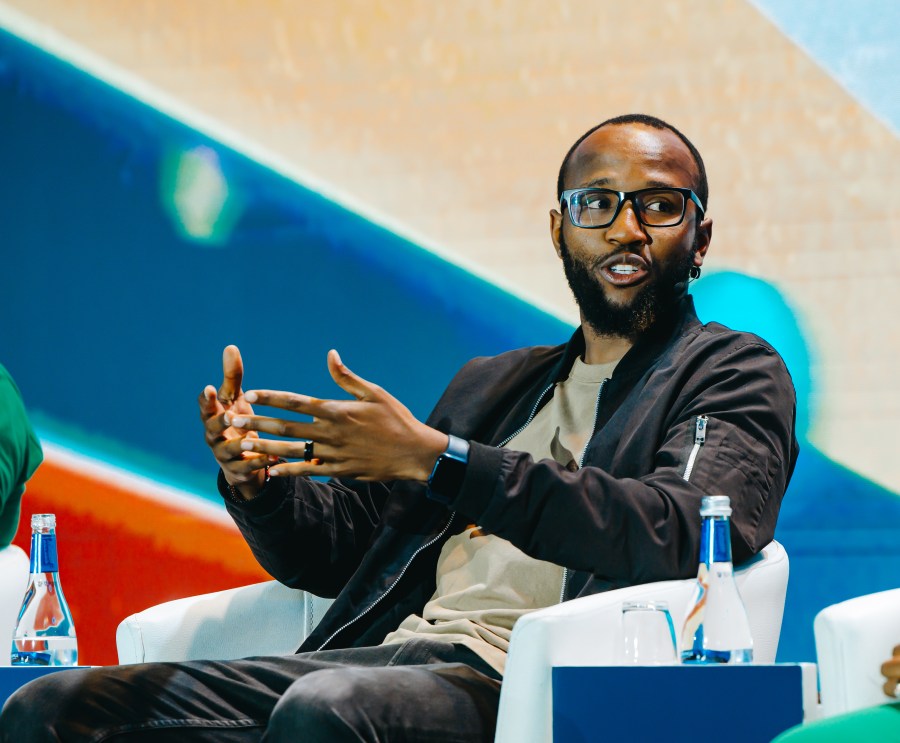
The news that Twiga has entered administration hit close to home. I know what it feels like to build in this arena. To believe deeply in a problem worth solving, raise significant capital against that conviction, employ hundreds of people, and eventually confront the uncomfortable reality that the business model simply does not work.
As MarketForce failed, I wrote a piece called The Storm Is The Time To Fish. At the time, I was trying to clarify a few things about what was happening in B2B commerce in Africa. Three years later, my views have not changed.
First, we should be careful about crucifying founders when experiments fail.
The founders behind companies like Twiga, Sendy, Koko Networks, Copia, MarketForce and others were the men and women in the arena. Collectively, this generation of founders attracted hundreds of millions of dollars of foreign direct investment into Kenya, created thousands of jobs, developed talent, built technology and infrastructure, and attempted to solve some incredibly difficult problems.
That does not absolve founders from accountability. Capital comes with responsibility. Employees, suppliers, investors and customers can suffer real consequences when companies fail.
But failure is not the same thing as fraud. There is an important distinction between someone who sets out to fleece investors and someone who raises capital, deploys it into an ambitious thesis, and discovers – sometimes after many years and a lot of money – that the economics simply don’t work.
At MarketForce, our business model was not sustainable. I said that then, and I’ll say it again now. We believed technology, scale and eventually embedded financial services could fundamentally improve the economics of FMCG distribution across Africa. What we discovered was that we were operating in a brutally competitive, low-margin industry where digitisation often gave customers more choice and pushed margins down even further. The experiment failed.
For some companies, that realization came sooner. For others, it took longer and consumed significantly more capital – sometimes the difference was simply how deep your investors’ pockets were, and how long they were willing to keep financing the experiment. But the writing was on the wall for this category a long time ago. And this is where I think we need to separate the battle from the war.
The battle was never to build the biggest B2B ecommerce company. The war is much bigger: it is to figure out how technology can solve real problems on this continent while producing businesses with healthy unit economics, sustainable margins and the ability to survive without perpetual injections of venture capital. It is to build enduring African companies.
And lest we forget, some startups did eventually scale successfully. M-Pesa, Cellulant, Pesapal and Kopokopo are proof that it’s possible – not because they got lucky, but because they found models that could stand on their own.
Some of the founders who lost the last battle will build again, and some of the employees who lived through these companies will become exceptional founders themselves. The infrastructure, talent, lessons and scars left behind will become the foundation for the next generation. That is how ecosystems mature.
Silicon Valley’s history is not a straight line of victories. Neither will Africa’s be.
We should study what went wrong without rewriting history as though everyone involved was foolish or malicious. We should hold people accountable where accountability is warranted. But we should also preserve our appetite for ambitious experimentation. Because if every failed company becomes a public execution of its founders, we shouldn’t be surprised when the next generation chooses to play it safe.
I would rather have a generation willing to enter the arena.
Personally, I lost that battle. It hurt. I learned more from it than I probably understood at the time.
And then I went back to work.
That battle was lost. But the war is not over.


